
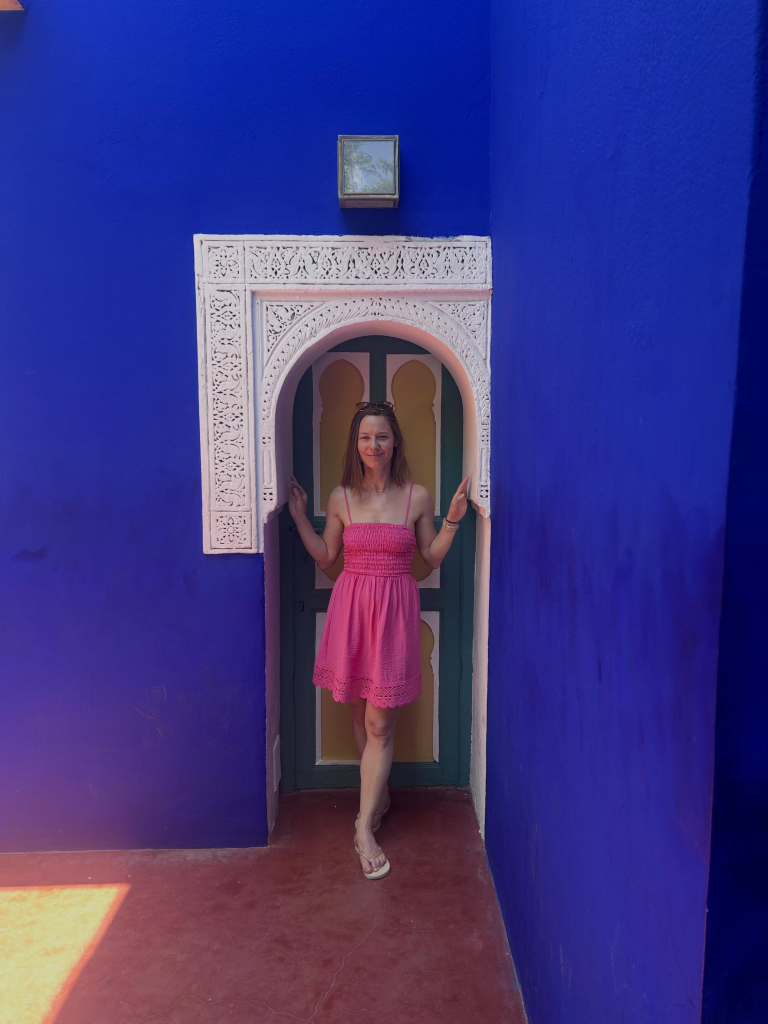
We landed in Marrakech on 7th June, and from the moment we stepped off the plane, this city had us. Here’s everything — what we ate, where we stayed, what we overpaid for in the souk, and how to do it smarter.
Table of Contents
Where We Stayed: Dar Akal, North Medina
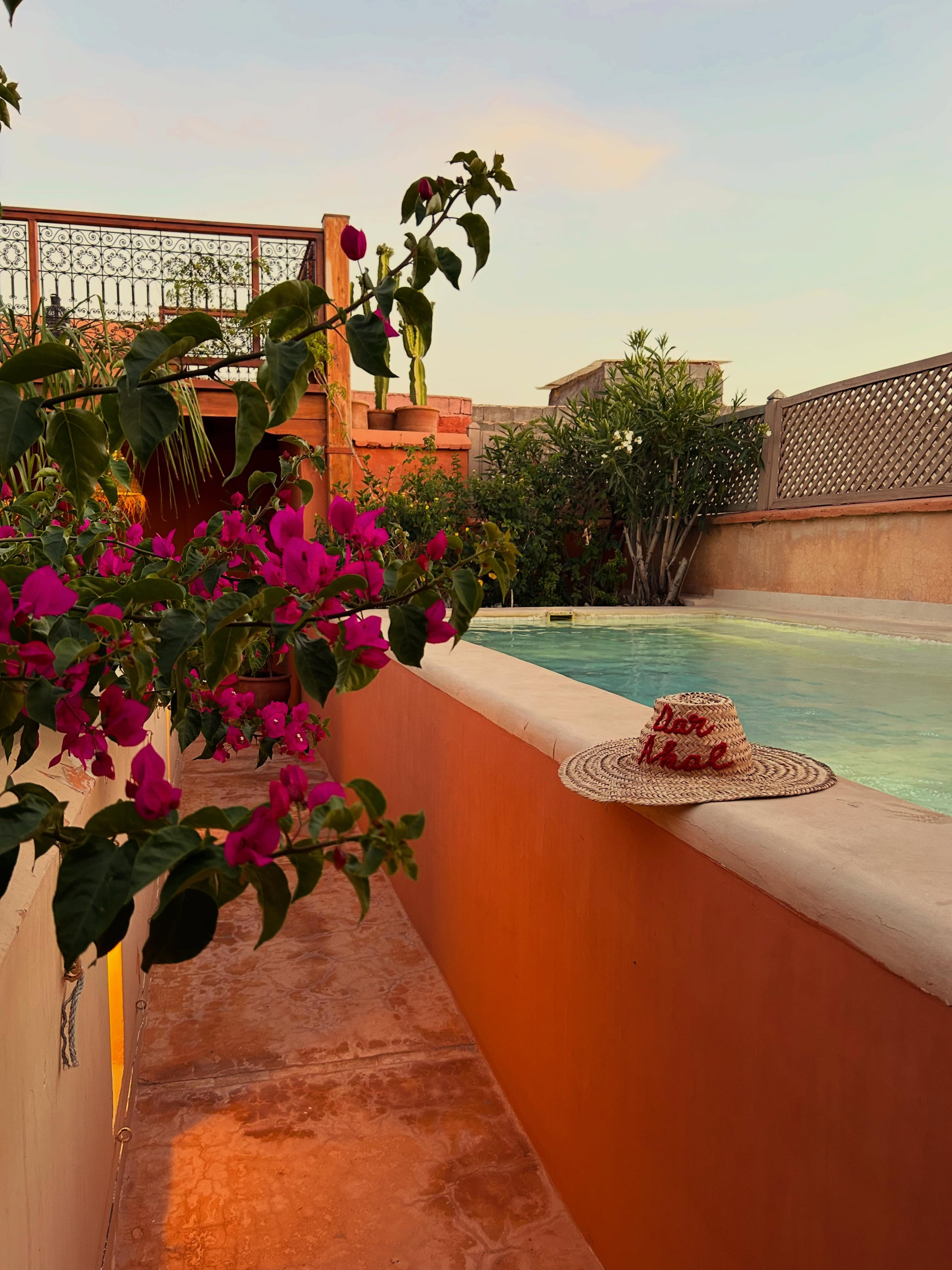
I’d booked Dar Akal well in advance, and it turned out to be one of the best decisions of the trip. Before we get into it — a quick note on terminology, because it matters when you’re booking: a dar is a traditional Moroccan townhouse built around an interior courtyard, while a riad typically has a garden. Both are characterful, both beat a generic hotel in the medina — but they have a different feel.
Dar Akal came with a free airport transfer, a detail I didn’t fully appreciate until our driver wove through the city and handed us off to the dar’s manager at the medina entrance. From there, we followed him through narrow, winding alleyways — the medina really is a maze, and I mean that affectionately.
On arrival: strong mint tea, a printed invoice, and a genuinely warm welcome. We’d booked a hammam too, and here I learned the ritual has two versions — DIY or assisted, where a lady guides you through the whole process. The assisted option costs an extra 200 MAD, and honestly? We would never have attempted it solo (that option was given for free in our dar’s booking). Well worth it. Having hammam facilities in-house rather than tracking down a standalone hammam elsewhere in the medina is a real convenience — don’t underestimate that when you’re booking.
Our room, Azzouna, was lovely. We freshened up and headed straight out.
Day 1 (Sunday): Souks, Tagines & Jemaa el-Fna
We skipped the eSIM and navigated the medina the old-fashioned way — offline GPS, maps, and reasonable spatial awareness. Millennials tend to manage fine. If you’re not confident with navigation, get the eSIM before you land.
Dinner: Anzar Restaurant
https://share.google/HvPsAas9BHKFfhUCM
I’d researched this before leaving London. It doesn’t look like much from the outside — few places here do by Western standards — but the reviews were right. Both tagines were excellent (kefta for me, lamb with prunes for Mike), the juices were fresh, and I made a discovery I’m still thinking about: avocado and orange juice. Strange on paper. Brilliant in a glass. We paid 220 MAD for two, which remains the cheapest and arguably best meal of the entire trip. Cash only — make sure you’ve exchanged before you arrive. We sorted dirhams in London beforehand.
En Route: Museum of Marrakech & Ben Youssef Madrasa
We passed both on the way to dinner. The Ben Youssef Madrasa is a 14th-century Quranic school and one of the most ornately decorated buildings in Morocco — carved stucco, cedarwood screens and geometric tilework at a level that stops you mid-stride. One of the most significant examples of Islamic architecture in North Africa, and easy to combine with a souk wander.
Jemaa el-Fna
No trip to Marrakech is complete without time at Jemaa el-Fna — the UNESCO-recognised central square that transforms completely between day and night. Snake charmers and orange juice stalls in the afternoon; food vendors, storytellers and musicians by evening. We wandered the souks around it, stopped at a rooftop -Le Salama https://share.google/S0CyYAEot8Mdn2QNj – for yet another avocado juice – this time with dates and almonds (70 MAD), then walked back to Dar Akal to rest by the pool.
Day 2 (Monday): Palaces, Rooftops & My First Haggling Lesson
We walked south and split up for a few hours.
Mike: El Badi Palace — a 16th-century ruined palace built by Sultan Ahmad al-Mansur, once covered in gold and Italian marble, now a striking open-air ruin home to nesting storks and one excellent rooftop view.
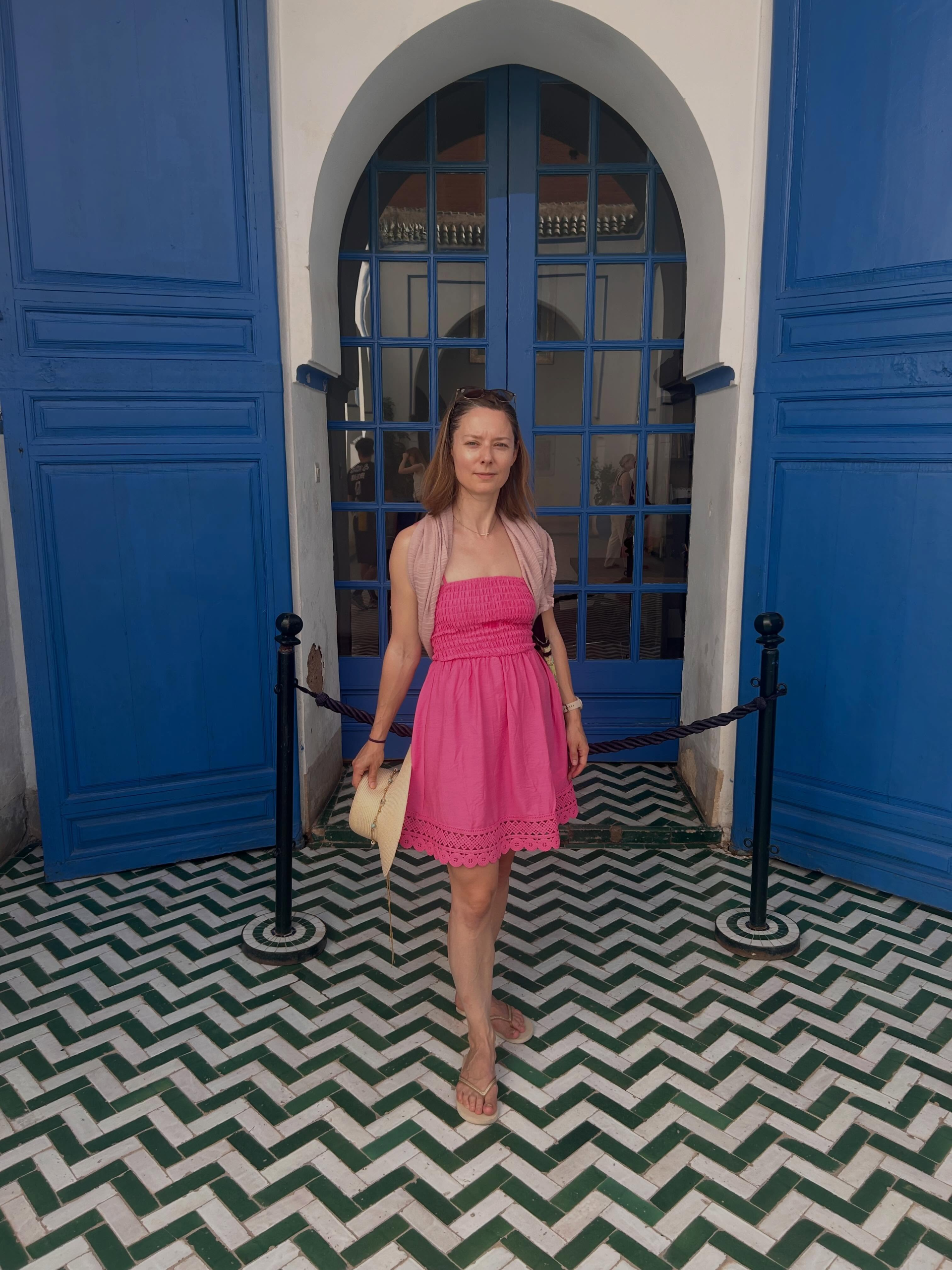
Me: Bahia Palace — a late 19th-century grand vizier’s residence filled with intricately painted ceilings, ornamental gardens and elaborately tiled rooms. A real sense of what imperial Moroccan wealth looked like. Neither takes more than an hour. Both are worth it.
We regrouped at Kosy Kawa rooftop: https://share.google/sx7zjJgzkI1F3VMCt— atmospheric, unhurried, exactly the kind of pause the medina demands.
Mellah (Jewish Quarter) & The Haggling Incident
We wandered through Mellah, the historic Jewish quarter, before the inevitable souk encounter. A vendor was persuasive. We ended up with two amber perfume cubes and a traditional Moroccan ceramic lip colour. His opening price: 150 MAD for both cubes. I expressed doubt, said I’d only take one, showed hesitation — we settled at 56 MAD for both plus the lip colour thrown in free.
Later I looked it up. Amber cubes: 10–15 MAD each. Lip colour: around 10 MAD. Fair price for everything: roughly 30–40 MAD. We paid 56. That’s about £1.60 over. The man was a character and I don’t entirely regret it — but the lesson stands: always Google (or ask Gemini) “what does X cost in Morocco” before you engage with a stall. Their opening prices are heavily inflated and haggling is not just expected, it’s the whole game.
Dinner: Cuisine de Terroir
https://share.google/XZnhVHtPZ70xaW9jt
Back through the souks, then to Cuisine de Terroir for dinner. I had the Royal tagine — 35 spices, and you can taste every layer — with a Moroccan pancake, 95 MAD total. Mike had chicken. Mint tea. Exactly what you want after a day on your feet.
Later: La Selima rooftop: https://share.google/CFjaqoRoSXJkiuVzc for a lovely dessert. Their pistachio crème brûlée (85 MAD) is outstanding. I was less convinced by the almond drink (70 MAD) — worth knowing if you’re choosing between the two.
Day 3 (Tuesday): Majorelle Garden & The Secret Garden
We booked Majorelle Garden tickets online for 12:30 — do the same. We had zero queue, walked straight in, and timed entry kept it manageable rather than overwhelming.
Coffee first: Ozen Café
ChatGPT had suggested 19 Gramm, which is well-rated on Google but the setting didn’t appeal on the day. Ozen Café was a better call — good coffee, pleasant atmosphere, easy walk to the garden.
Majorelle Garden
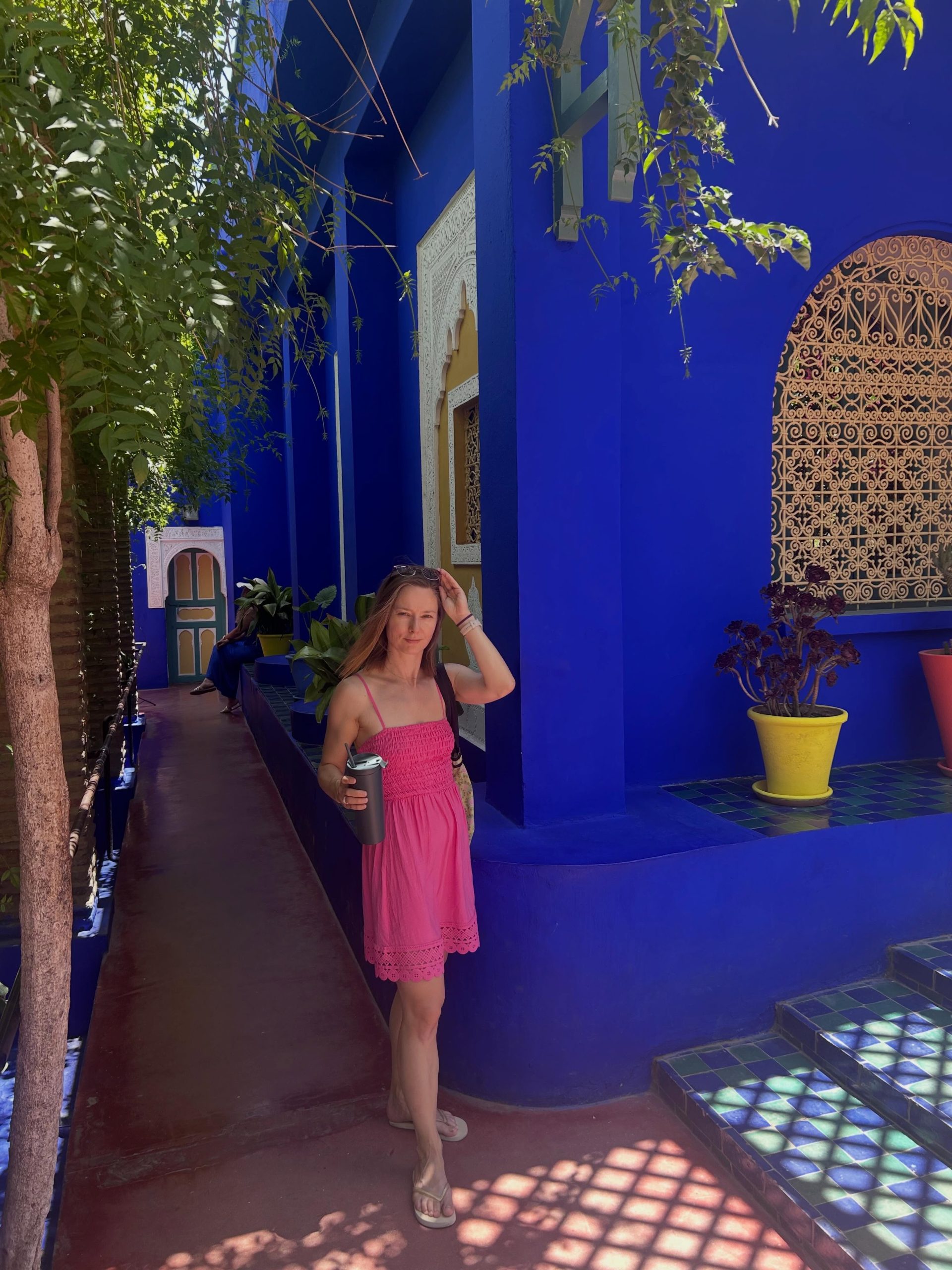
Small but beautiful. The cobalt blue of the YSL-era buildings is genuinely unlike anything I’ve seen anywhere else — striking in a way that photographs can’t quite capture. If your botanical garden reference points include Kew, Singapore’s Cloud Forest, the Amsterdam Botanical Garden or even Lullingstone in Kent, the plant collection won’t surprise you. But the buildings alone make the visit worthwhile. We spent 45 minutes. We skipped the YSL Museum and the Berber Museum — neither was a priority for us.
The Secret Garden
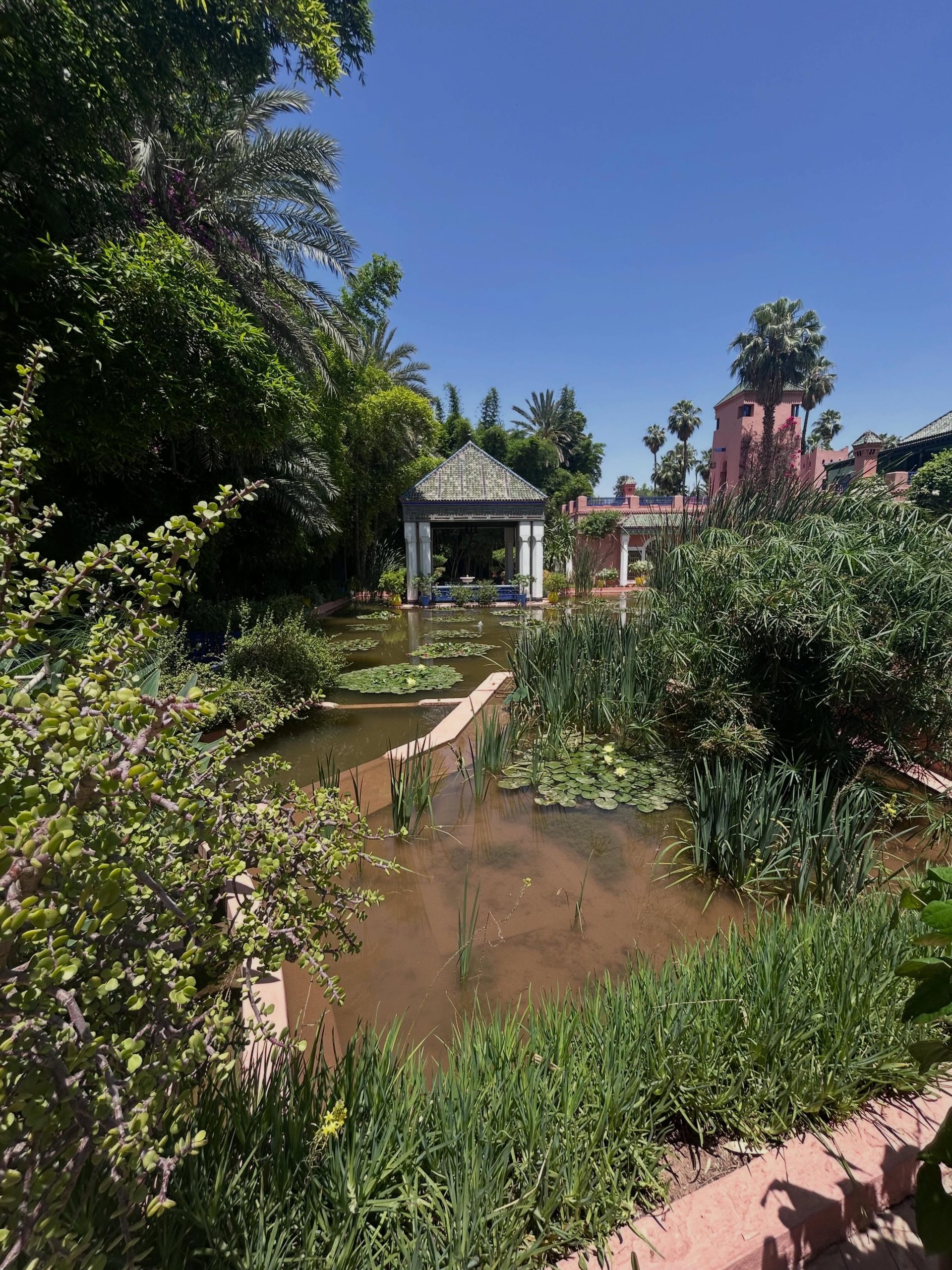
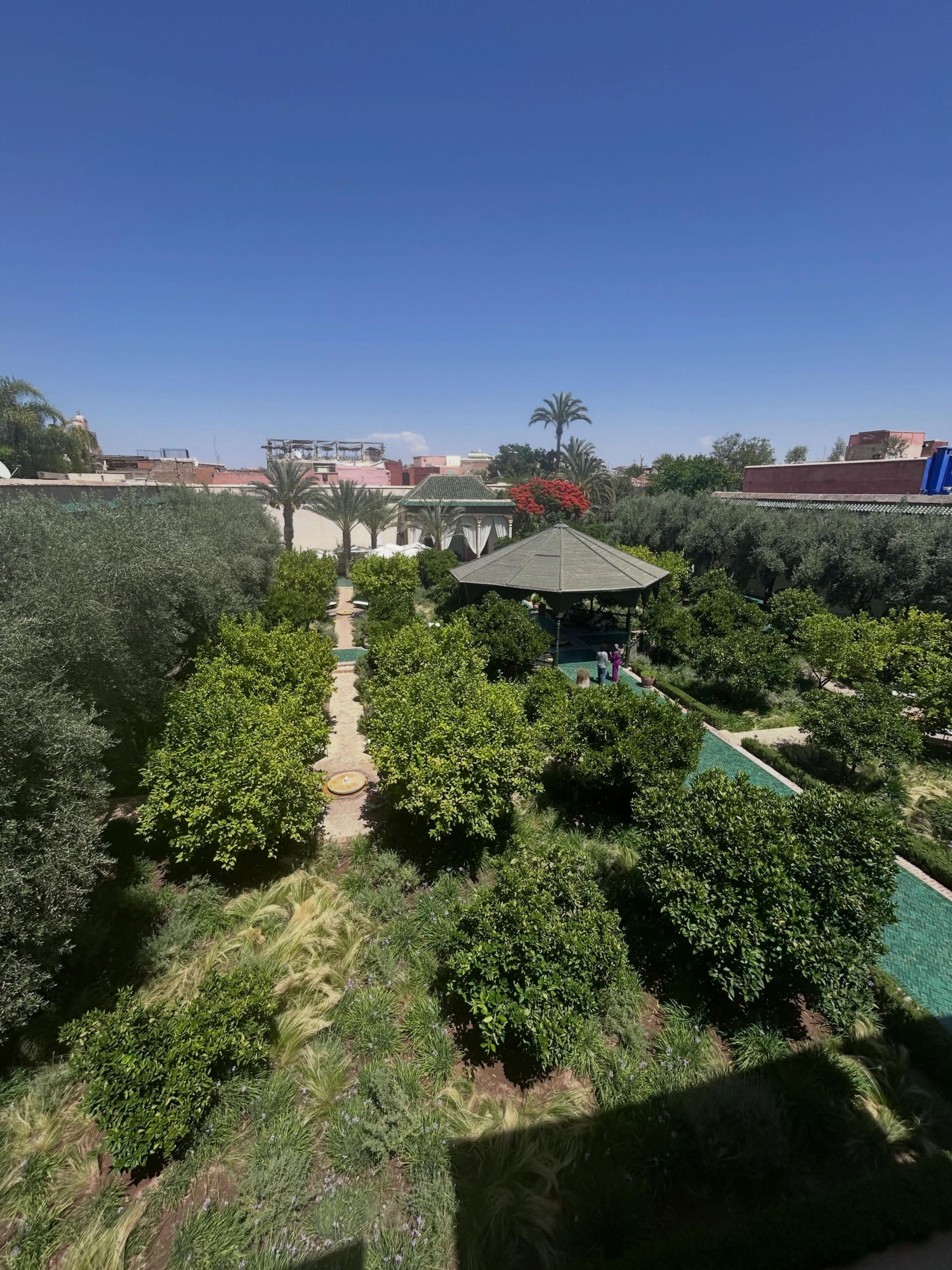
This one I loved more than I expected to. Quieter, more serene, with beautiful water passages running through it and a pace that felt genuinely restorative. We sat with avocado and orange juice — the best version I had in all of Marrakech — for the better part of half an hour. In 35°C heat, sitting still in the early afternoon is not laziness. It’s strategy.
Dinner: Chez Zaza
https://share.google/3CXJA26AsuMoTHmZf
I had the Zaza pastilla — a Moroccan savoury-sweet pie with chicken and their house spicing. Distinctive and delicious. Mike had lamb. Good avocado-orange juice here too, though for food, my trip ranking stays: Anzar and Cuisine de Terroir ahead on taste despite being cheaper. A higher price tag doesn’t guarantee a better meal — something this trip confirmed repeatedly.
Day 4–6 (Wednesday–Friday): Private Desert Tour to the Sahara
This was the part of the trip I’d spent the most time researching. Desert tours are a minefield — wildly inconsistent pricing, almost no like-for-like comparison available, and a huge range in camp quality. I put the work in.
How I Compared the Tours
Here’s every quote I received, with full accommodation details:
| Tour Provider | Tour | Price | Accommodation |
|---|---|---|---|
| Caravanserai Luxury | 3-day private tour to Sahara | €1,660 total | Riad Serai + Caravanserai Luxury Camp |
| Best of Merzouga | 3-day private tour to Sahara -Luxury | €790 pp | Eden Boutique Hotel + Sunrise/Madu/Tiziri/Ideal Camp |
| Best of Merzouga | 3-day private tour to Sahara -Semi-luxury | €650 pp | Eden Boutique Hotel + Sunrise/Madu/Tiziri/Ideal Camp |
| Best of Merzouga | 3-day private tour to Sahara Revised – regular/budget option | €560 pp | Dar Blues or Riad Paradise Dades + Sunrise/Madu/Tiziri Camp |
| Morocco Fab Travel | Private Opt 1 | €374 pp | Hotel Babylon Dades + Africa Luxury Camp |
| Morocco Fab Travel | Private Opt 2 | €445 pp | Hotel Babylon Dades + Caravanserai Camp |
| Morocco Fab Travel | Private Opt 3 | €494 pp | Dar Blues + Caravanserai Camp |
| Morocco Fab Travel | Private Opt 4 | €734 pp | Eden Boutique Hotel + Desert Luxury Camp (AC/pool) |
| Morocco Fab Travel | Shared Tour | €215 pp | Hotel Babylon Dades + Africa Luxury Camp |
| Marrakech Desert | Transport only | €350 pp | Dades Valley hotel (unspecified); book camp independently |
| Marrakech Desert | No camp/camels | €355 pp | Dades Valley hotel only |
Because pricing wasn’t standardised, it was genuinely difficult to compare options directly. In the end, we booked through Tourradar, an Austrian platform with a solid selection of private itineraries and a clearer package structure — one that could be tailored to my ideas — than most of the direct vendors I contacted, and you see above…
The original itinerary included a first night at Dades Gorges in Dar Ahlam and a second night at a standard Sahara camp. I paid an extra £100 to upgrade to Caravanserai Camp in Merzouga. After comparing photos and reviews, it felt right. It absolutely was.
Our Driver
Mustafa was excellent — calm, reliable, genuinely kind. His English was limited, which meant we missed some of the history along the route. In the era of offline Wikipedia this matters less than it once did, and the views mattered most. But if you’re someone who wants a running commentary, it’s worth flagging language requirements when you book.
Wednesday: Marrakech → Ait Ben Haddou → Dades Gorges
First stop 1h39 after departure — a short coffee break — then on to the day’s main event.
Ait Ben Haddou
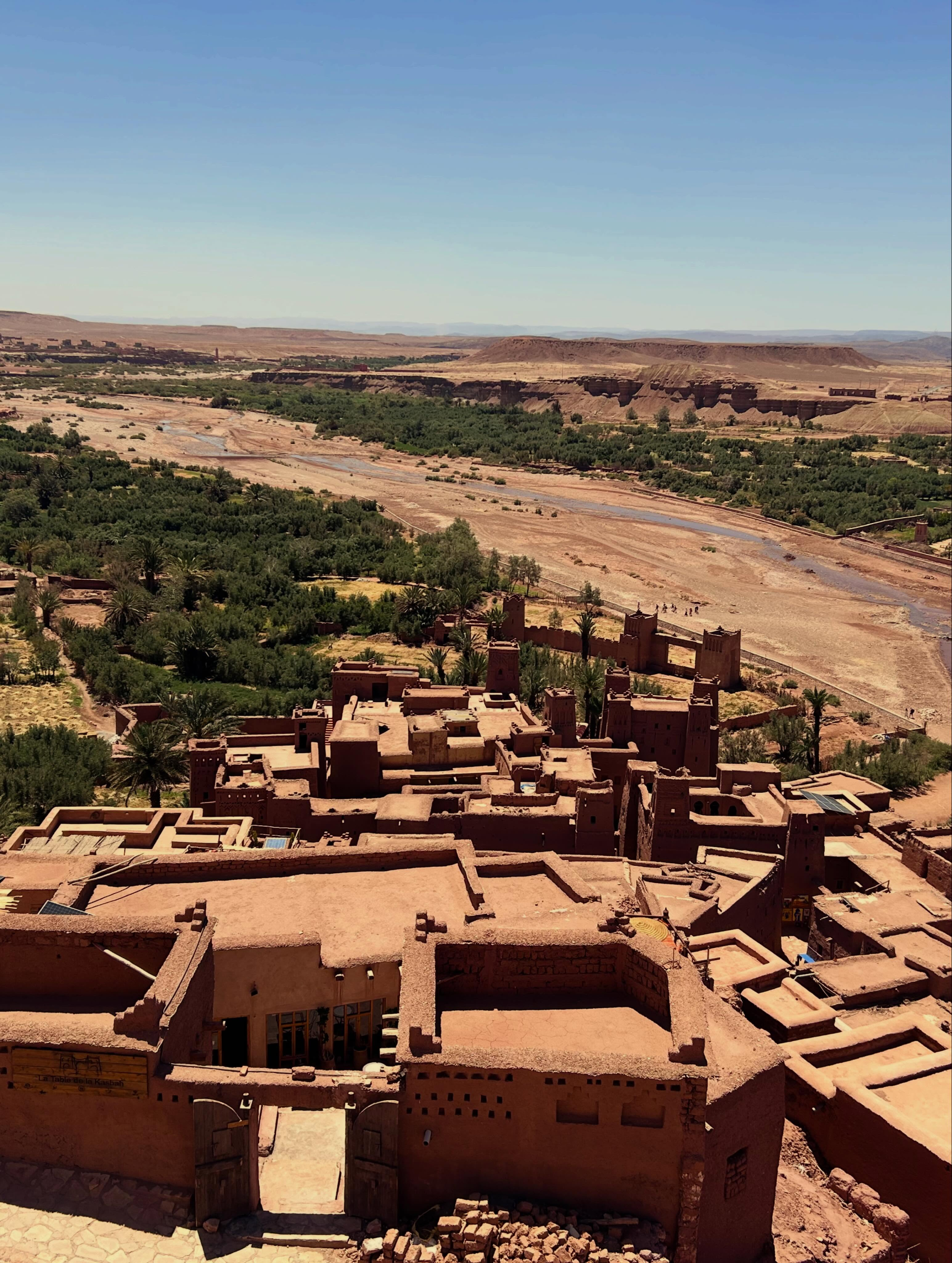
An 11th-century fortified city (ksar) and UNESCO World Heritage Site, Ait Ben Haddou is one of the best-preserved examples of southern Moroccan earthen architecture — and one of the most filmed locations on the planet. Gladiator, Game of Thrones, The Mummy, Lawrence of Arabia and Babel were all shot here. Some families still live in the old town, though most have relocated across the river to the new city where electricity, water and internet are available. A local photographer wanted to take our picture, and I said “tagine” instead of “cheese.” Genuinely funny. The kind of moment you remember.
We passed through the argan oil region — we chose not to stop at the shops, having no interest in navigating quality claims or pressure selling.
The Rose Valley (Kelaat M’Gouna)
A brief stop while Mustafa ran an errand. We didn’t visit any shops. When he returned to the car, he handed us a small bag of rose-based products from the town — a completely unprompted, lovely gesture.
Monkey Fingers Rock Formation
A surreal natural rock formation. Worth a photo stop.
Dadès Gorges
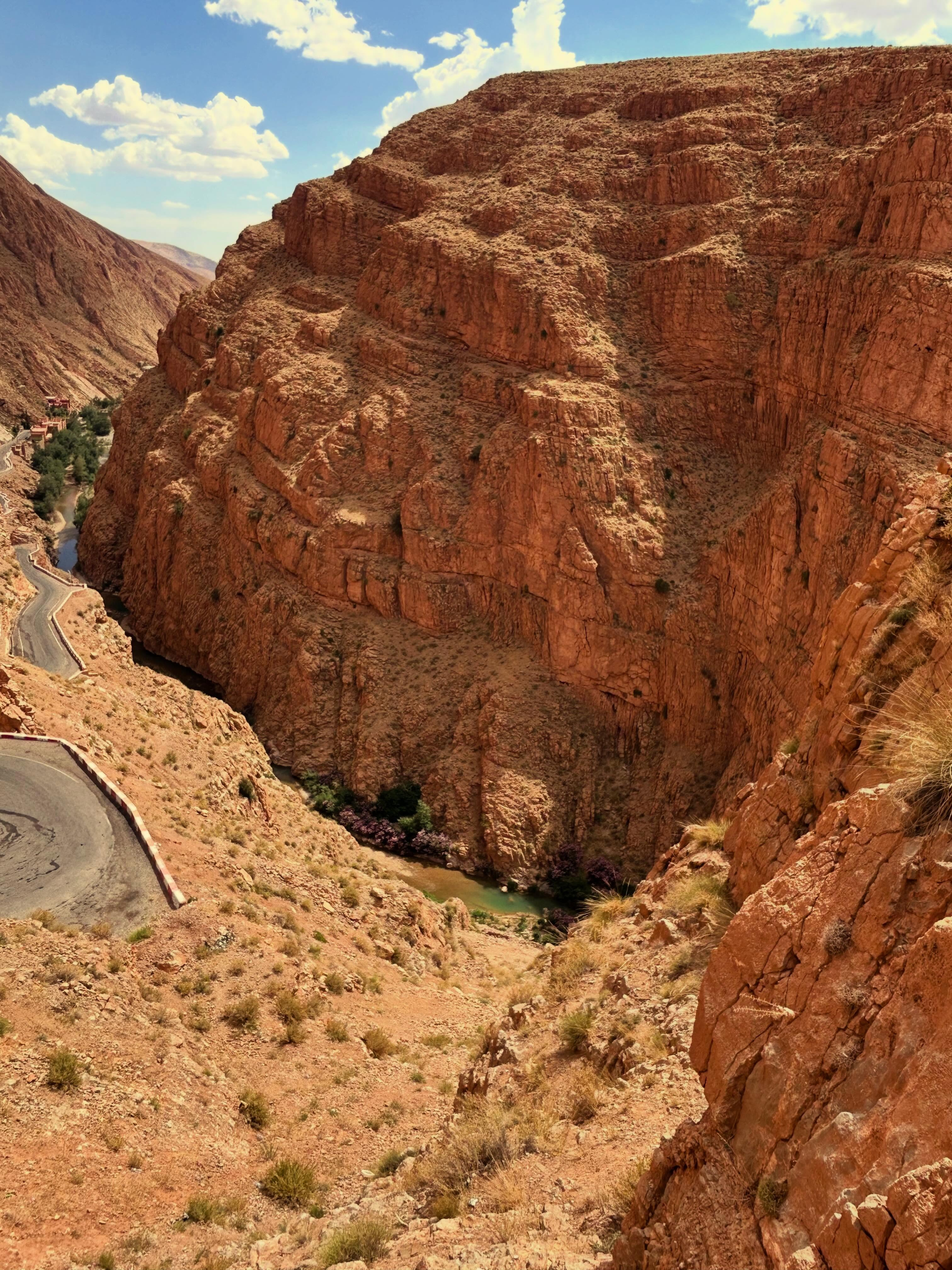
Breathtaking. Dramatic canyon walls, a clear turquoise river through the valley floor, roads snaking into the rock face, pink flowers everywhere. One of those places where you stop talking and just look.
We arrived at Dar Ahlam around 5pm — three hours to enjoy the pool before an included three-course dinner at 8. Simple, perfect, exactly right after nine hours in a car.
Thursday: Dadès → Merzouga
Breakfast included. Departed 9:30.
Boumalne Dadès: A Berber town above a river valley — a reminder that this part of Morocco stays green wherever water runs.
Tineghir: A historic oasis town at the entrance to Todra Gorge, with one of the largest palmeries in Morocco stretching for miles. Communities have been sustained here for centuries by that green corridor in the desert.
The Underground Water System: Khettara
As we drove toward Merzouga, lines of low earthen mounds appeared across the desert floor. These mark khettaras — an ancient underground irrigation network introduced to Morocco over a thousand years ago, originally from Persia. Gently sloping tunnels channel groundwater from the Atlas foothills underground to agricultural land, powered entirely by gravity. No pumps, no electricity. In a landscape that receives almost no rainfall, this system made permanent human settlement possible. It still functions today. Quietly extraordinary.
At 40°C, we stayed in the car. But knowing what those mounds represented made the drive more interesting.
We arrived at Riad Serai around 4pm — three hours to rest before the camel trek. Air-conditioned rooms to eat and charge devices, a shaded rest corridor, a pool. We swam, charged everything, and prepared ourselves.
Camel Trek to Camp (7pm)
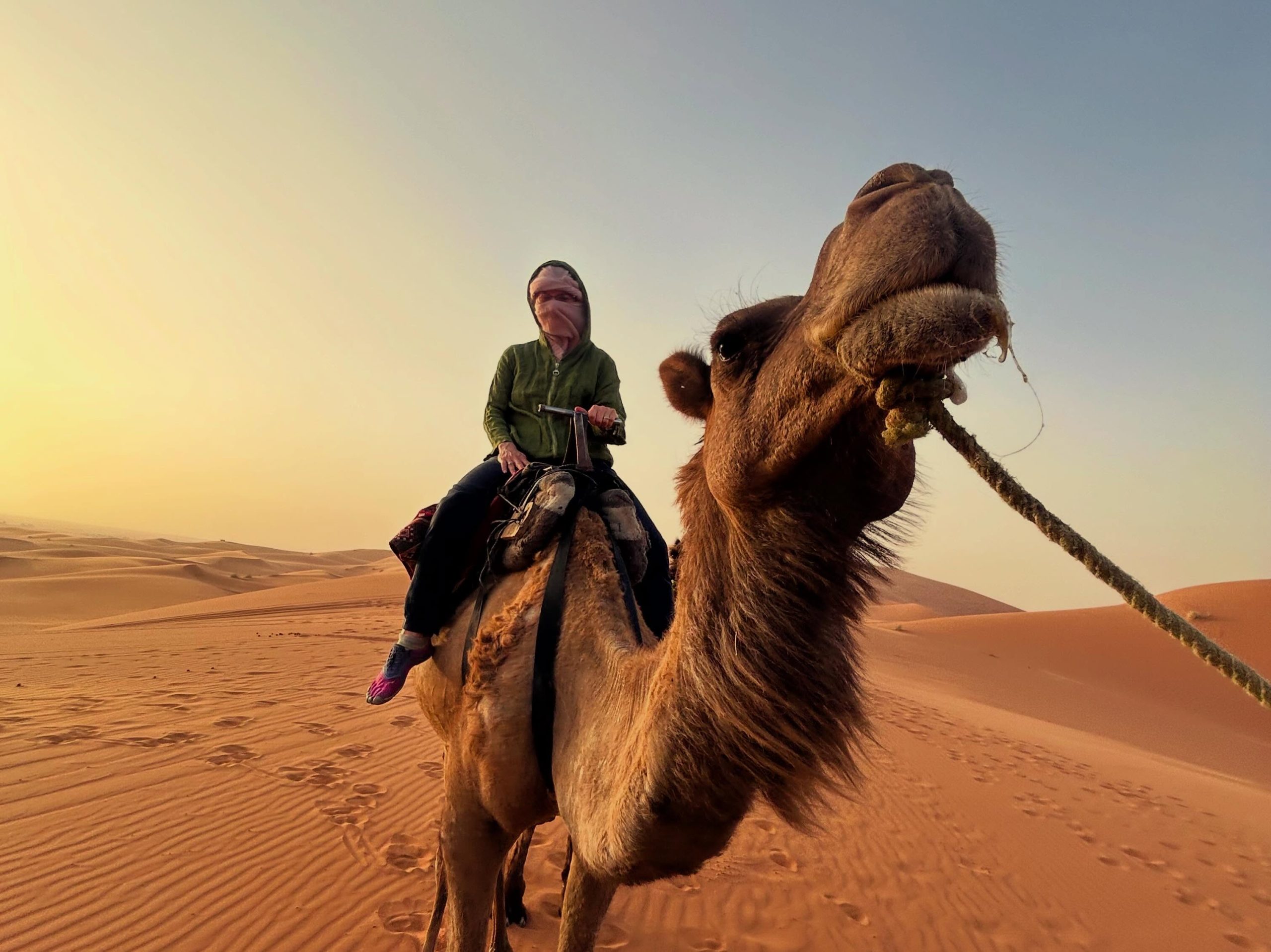
Mustafa wrapped my scarf Berber-style before we set off — face, nose and all covered. Not glamorous. Extremely practical.
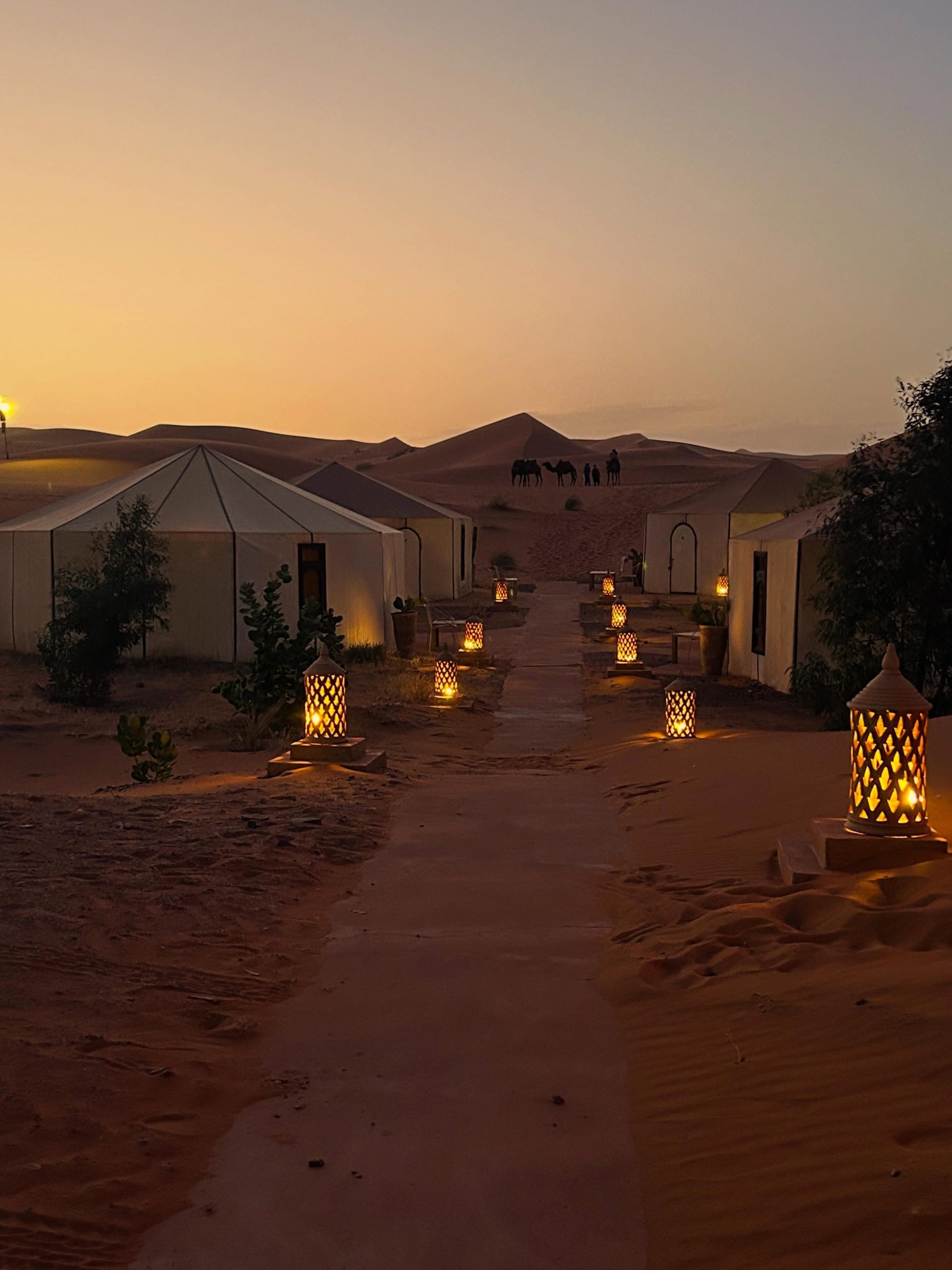
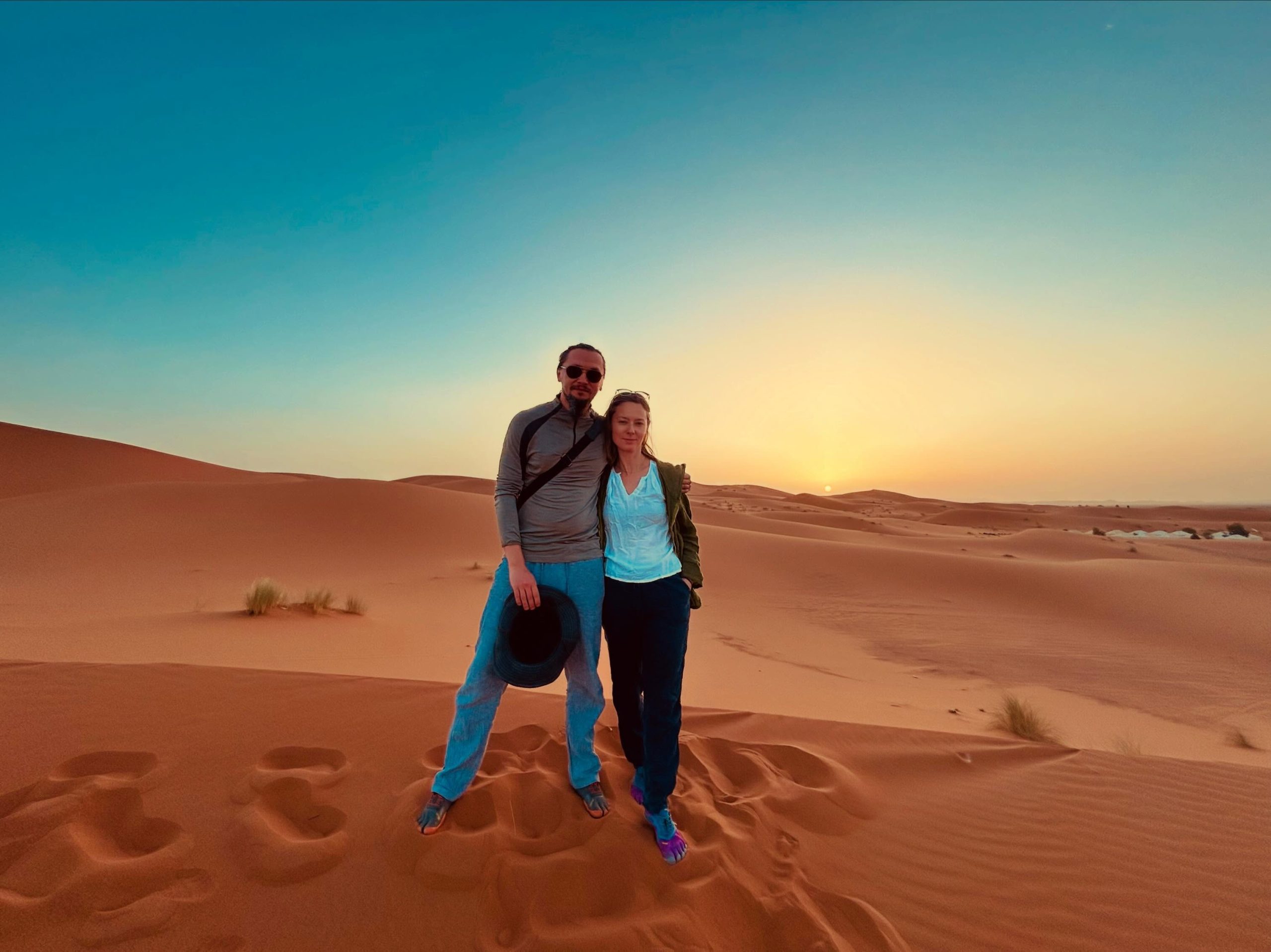
Our group: the two of us and one other traveller. Our guide made a couple of stops for sunset photographs. After 1h10 of swaying through the dunes in fading golden light, we reached Caravanserai Camp.
Welcome drink on arrival. Nothing has ever tasted better.
Dinner at 9pm was the best meal of the trip — Moroccan salad, beets with cinnamon and orange (unexpected and brilliant), aubergine and cheese tagine, lemon confit tagine, then fresh fruit. Our camel companion was celebrating her birthday; we got cake. We hadn’t mentioned our 10th wedding anniversary, but the evening felt like a celebration regardless.
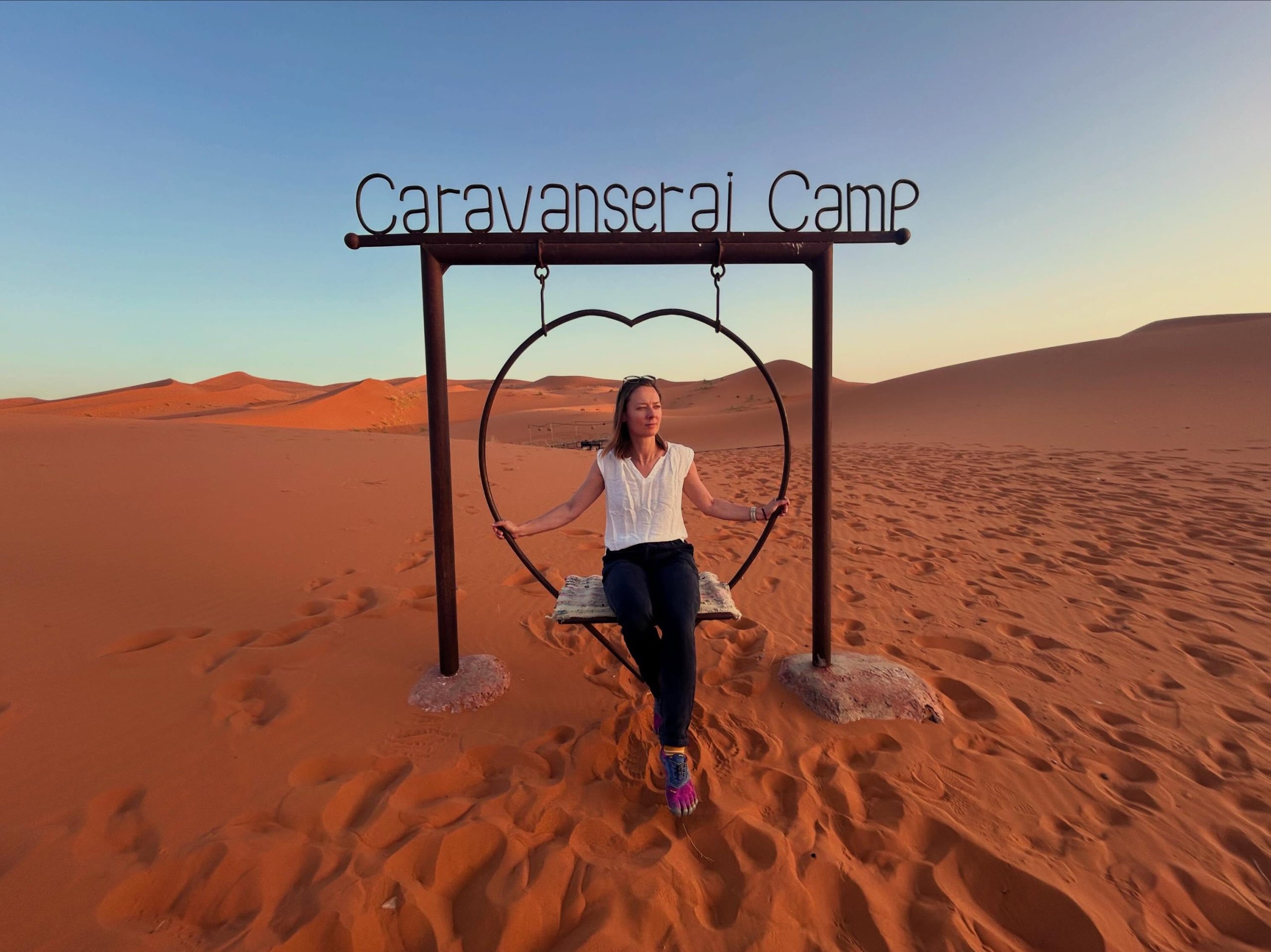
After dinner: stargazing on a swing in the Sahara. The rest of the group went to listen to Berber music. We went to sleep, alarm set for 5:50am.
Friday: Sunrise → Drive Back to Marrakech
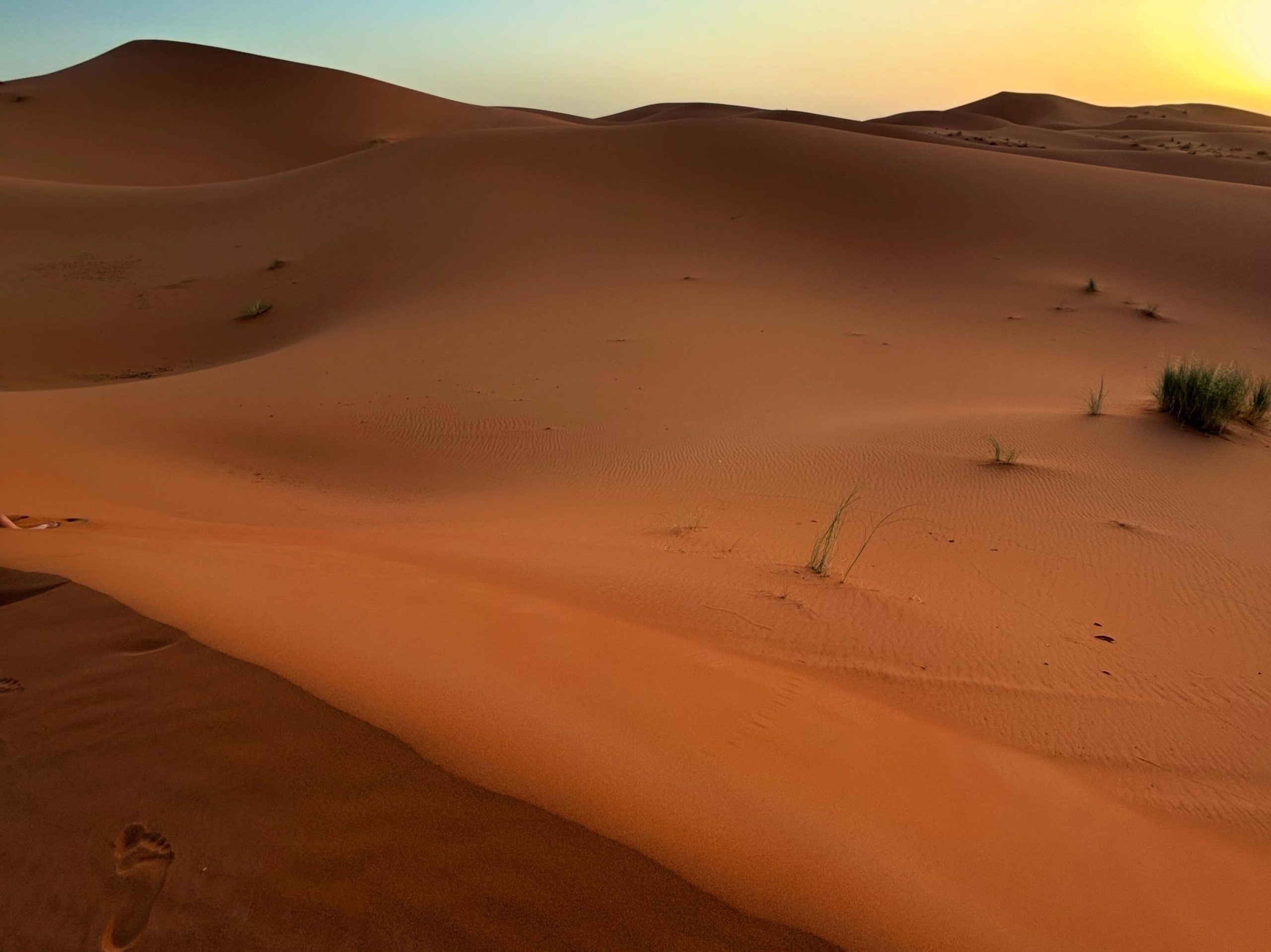
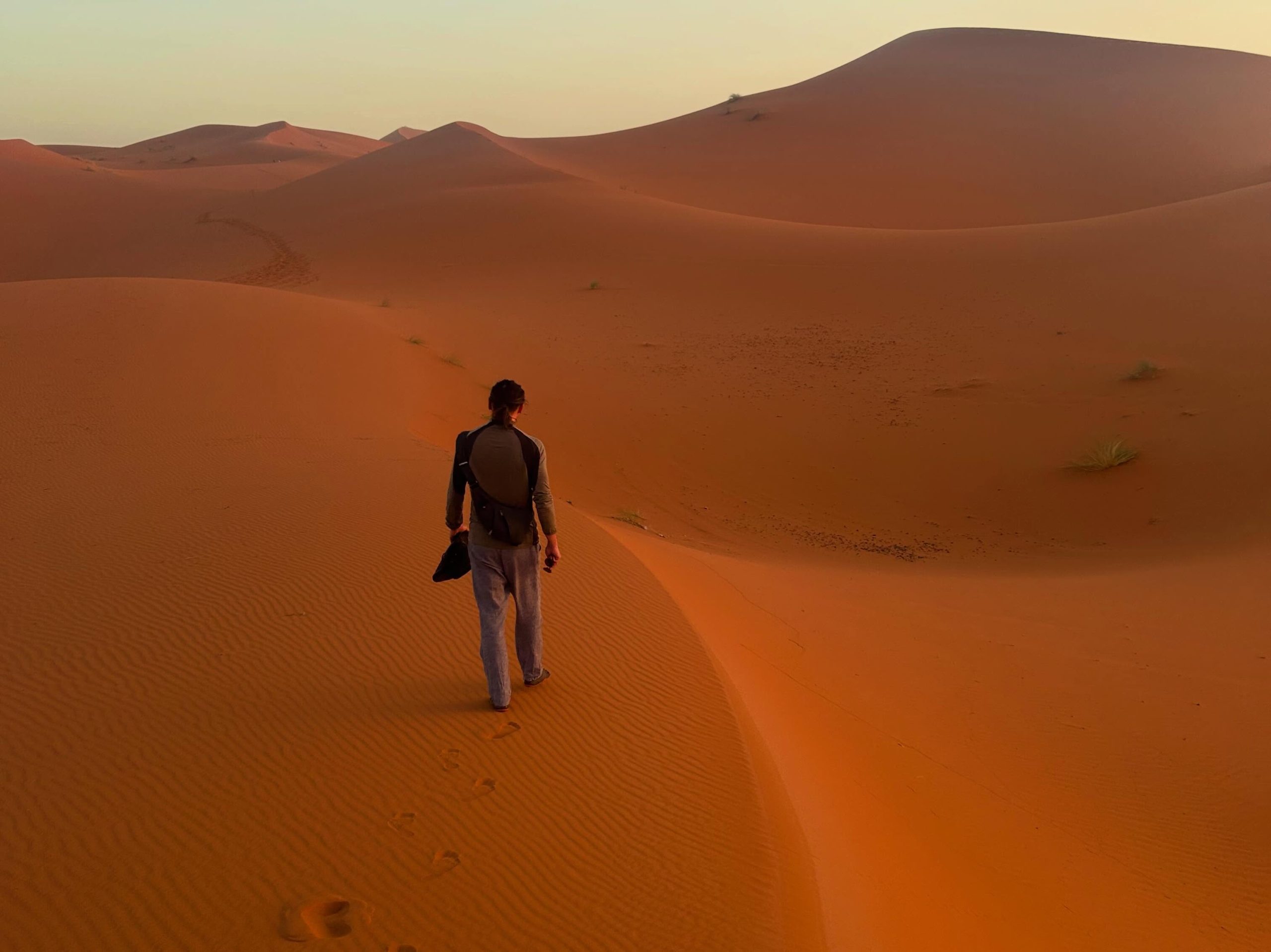
The sunrise happened in minutes — between 6:12 and 6:20, maybe eight minutes of colour shifting from deep red to gold to white. Worth every early alarm.
We walked the dunes in the morning light, had breakfast (egg and tomato tagine, Moroccan bread, pancakes), met Mustafa and began the long drive back. We don’t stop for lunch — neither did he. We were back in Marrakech just after 5pm, nearly two hours ahead of the standard group tour schedule. One of the real advantages of going private.
Day 6 (Friday Evening): La Petite Joyau
Our final accommodation was a different experience to Dar Akal. Less intimate — closer in feel to a well-run budget guesthouse, with a courtyard pool at the centre and a rooftop lounge, but without the quiet, tucked-away atmosphere of the North Medina. It was half the price. For one night, it was absolutely fine. We traded atmosphere for economy and slept well.
Day 7 (Saturday): Slow Morning & The Best Bus Ride of the Trip
Slow breakfast. Checkout at 11am.
Mandala Society at Koutoubia
https://share.google/nqmYWHefkBZnp1NiA
Calm, funky, excellent coffee. I had a strawberry gazpacho with cheese— beautifully presented, genuinely interesting combination. Mike had a salmon sandwich. We also tried the inverted affogato (very sweet — be warned) and a Parisian Mont Blanc with chestnut and Honduras coffee. A perfect last early afternoon spot.
Airport: Line 19 Bus from Koutoubia (opposite KFC)
30 MAD each — around £3 for each of us. We’d been saving exact change for this, then boarded to find a brand-new, fully air-conditioned coach with a card reader. Comfortable, efficient, cheap. Local yellow taxis charge around 150–200 MAD and most drivers seemed to prefer open windows to AC. The bus wins on every metric. Take the bus.
16 Money-Saving & Practical Tips for Marrakech
1. Dar or riad — compare, then book direct. Check Agoda and Trivago to benchmark prices, then go to the property’s own website. Dar Akal was cheapest on their own site and included extras — free airport transfer, hammam — that made the overall value better than anywhere else I found. Direct booking is often worth it.
2. In-house hammam is worth the premium. Navigating to a standalone hammam in an unfamiliar medina adds friction to what should be a relaxing experience. If your accommodation offers it, use it.
3. Don’t judge a restaurant by its frontage. Some of our best meals were in places that looked underwhelming from the outside. Anzar and Cuisine de Terroir outperformed Chez Zaza on both taste and price. Fancy location ≠ better food.
4. Cheapest rooftop at time of writing: El Kennaria. Good value for a sundowner without the tourist premium.
5. June flights are cheaper — but go in knowing the heat. We paid £135.96 return for two (hand luggage only, 7–13 June). June is shoulder season as temperatures climb and demand drops. A useful trade-off if you can handle 35–40°C.
6. Hand luggage only = no baggage fees and less souk temptation. A restricted bag means fewer impulse purchases you’ll regret.
7. Linen dresses are the Marrakech uniform. I wore the same summer dress for most of Marrakech days — washed overnight, dry by morning. Versatile, breathable, one item doing the work of four.
8. Reusable insulated water bottle — non-negotiable. Fill it at your accommodation every morning. Take it everywhere and have a cold water for longer 🙂
9. Footwear: sandals, flip flops, five-finger shoes. Five-fingers in particular are space-efficient and genuinely useful for Sahara camel riding trip, whereas sandals were useful when walking through Marrakesh medina.
10. Clip your hat to your bag. Small thing. Makes a real difference when you’re not wearing it.
11. Wear your bulkiest item on the plane. Linen shirt, scarf, lightweight jacket — wear it, don’t pack it.
12. Mineral SPF every day, without exception. I switched from Suntribe to Badger SPF for this trip and I’m sticking with it. Go mineral, reapply often.
13. Pack earplugs. Mosques, street noise, thin walls. You will thank yourself.
14. Solar power bank + multi-socket adapter. Two nights in the desert with no mains electricity made the solar bank genuinely useful rather than a nice-to-have. Although they had USB chargers, so a relevant cable sorted phones charging painlessly. A plug adapter with USB ports handles everything else.
15. Take the Line 19 airport bus. 30 MAD per person, air-conditioned, easy. Don’t let anyone at the airport talk you into a taxi unless you have heavy luggage. It is a short trip of 30mins in an air-conditioned spacious and clean bus.
16. Exchange some cash before you leave the UK. We exchanged a small amount of pounds for dirhams in London and kept euros as backup. Cash is still essential in many restaurants and markets — don’t arrive empty-handed. In London we use : Thomas Exchange Global near Cannon St. In Marrakesh we went to Hotel Ali, located in the main square, Jemaa el-Fnaa. I saw good exchange rates at Bob Agnoau.
Have you been to Marrakech? Drop your favourite hidden spots in the comments — I’d love to add them to the list for future visitors.